


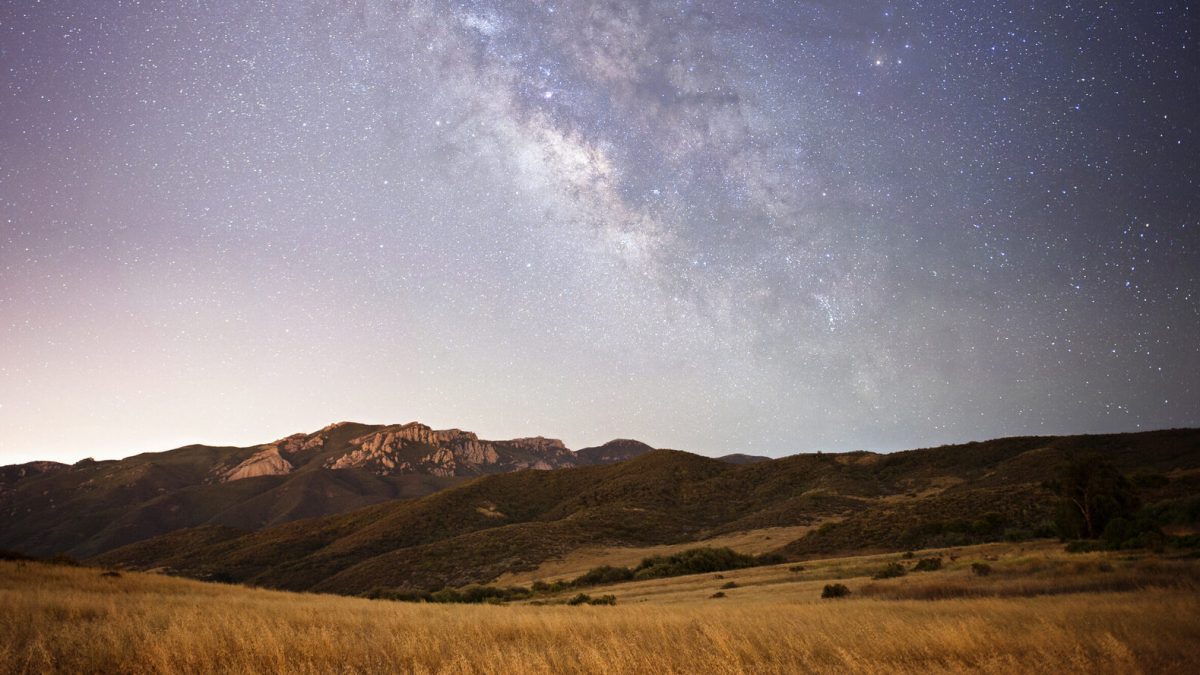
October is the month the sky gets good and the weather has not yet got bad. Nothing here needs a telescope, and most of it does not even need binoculars.

Give your eyes forty minutes
Dark adaptation is free, and it is the single biggest upgrade available.
The four things worth planning around
| What | When | Where to look | Kit |
|---|---|---|---|
| Draconids | Nights of the 8th–9th | North, high | Eyes only |
| Orionids | Peak around the 21st | East after midnight | Eyes only |
| Jupiter | All month, rising earlier | East, then south | Binoculars |
| Andromeda Galaxy | All month, best near new moon | High overhead | Binoculars |
Start with the meteors
Both showers this month are best watched the same way: lie back, look up, and stop trying to point at anything. A deckchair beats a telescope, and looking slightly away from the radiant catches more than staring straight at it.

The best instrument for a meteor shower is a blanket.
Then the planets
Jupiter is the easy win of the month: bright enough to find from a lit street, and steady enough that even shaky binoculars will show the four big moons as a line of pinpricks beside it. Watch on two nights a week apart and they will have moved.
- Brace the binoculars. A wall, a car roof, a fence — anything beats holding them.
- Look before midnight. Early in the month it climbs late; by the end it is up in the evening.
- Do not bother with magnification claims. A steady 10× shows more than a wobbling 20×.

Darkness beats equipment
Twenty minutes in the car to somewhere genuinely dark will do more for what you can see than any amount of money spent on optics. The Andromeda Galaxy is visible to the naked eye from a dark site and invisible from a lit garden, with the same eyes on the same night.
Red light, and why it matters
Dark adaptation takes about forty minutes and one glance at a phone screen destroys it. A red torch — or a phone in its red-filter mode, brightness at the bottom — keeps it. This is the difference between seeing five meteors an hour and seeing twenty.
What if it is cloudy on the peak night?
Both showers run for days either side of their peak at reduced rates, so a clear night two days out is worth far more than a cloudy night on the date in the table. Watch the forecast, not the calendar.
Next month: the year’s best meteor shower, and the one week to see it.


Watching Jupiter’s moons move over a week is the thing that got my kids interested.
The red-filter tip changed my whole evening. Thank you.